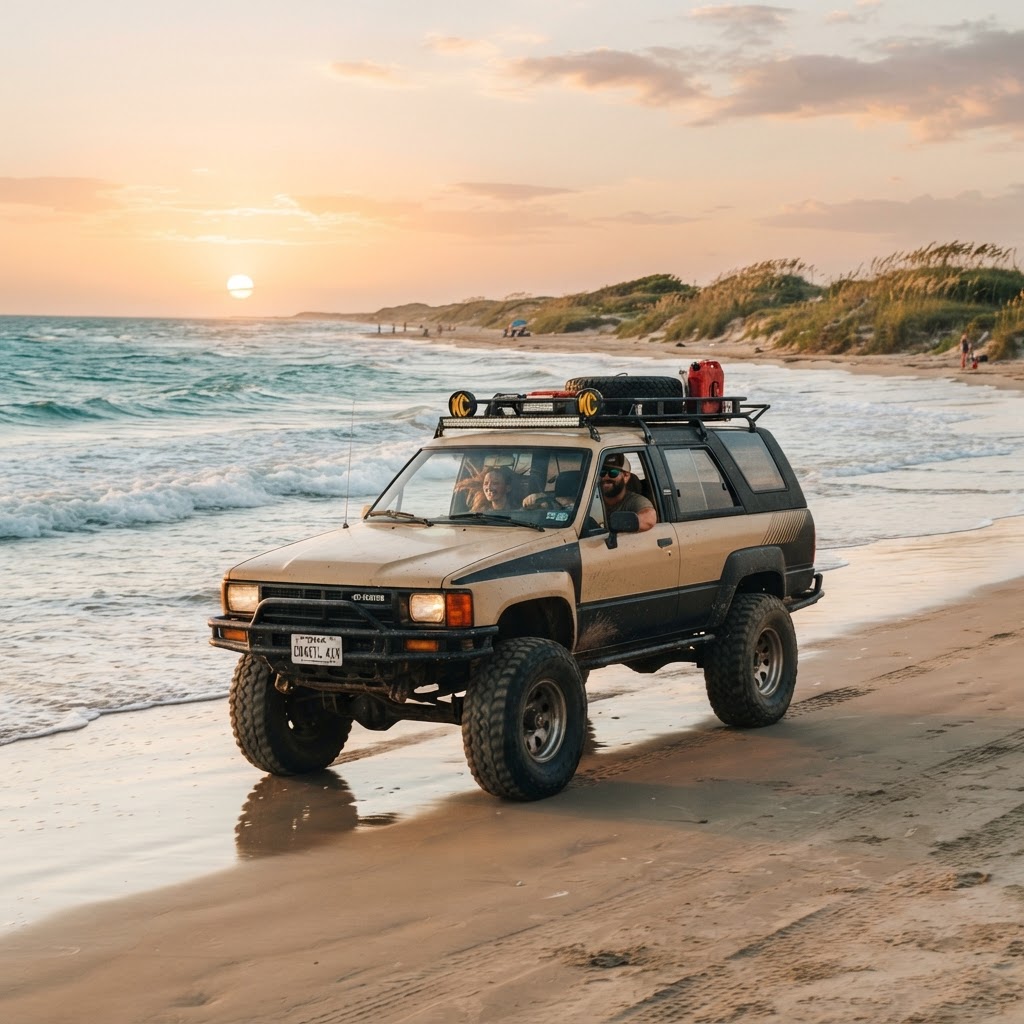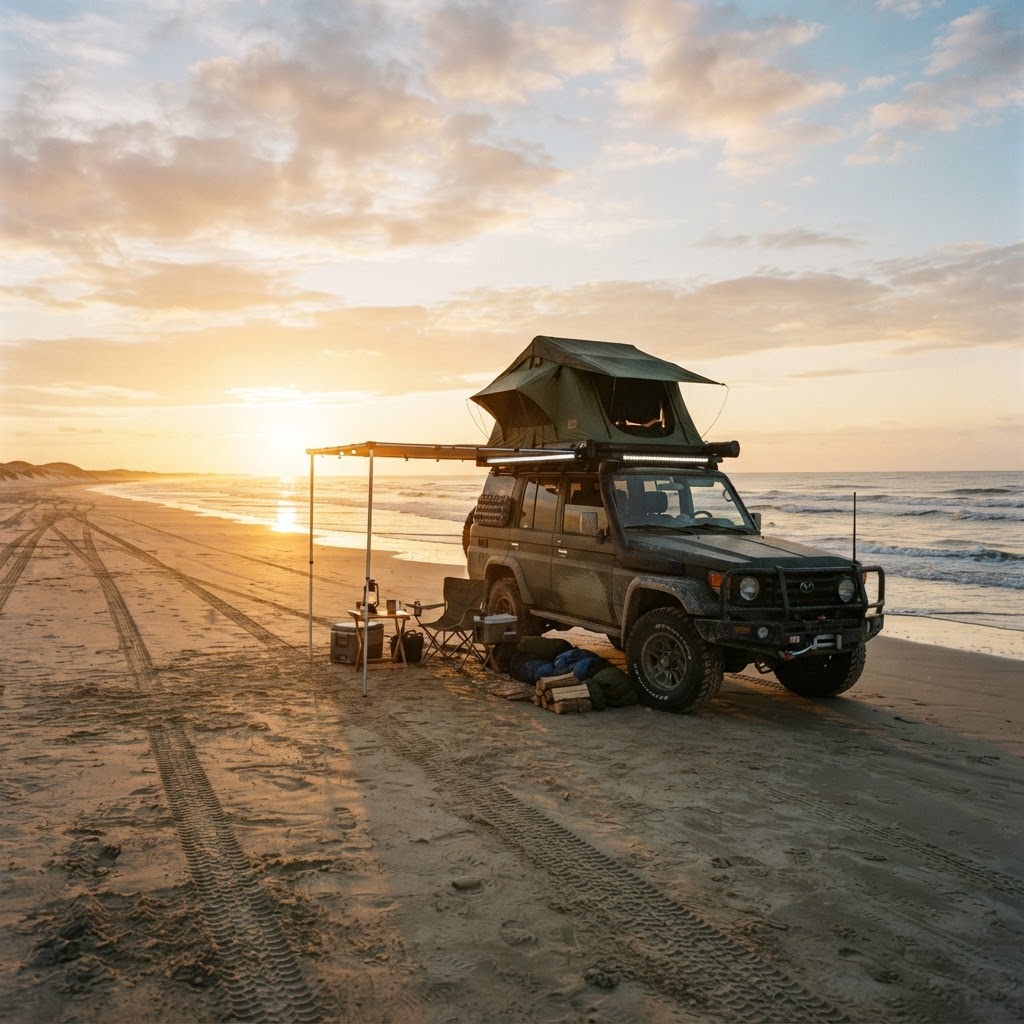
Forget the manicured campgrounds and the rows of RVs humping power poles; there is a place where the pavement ends and the true Texas coast begins. Padre Island National Seashore (PINS) offers 60 miles of protected, undeveloped coastline, providing the kind of off-road solitude that makes the salt crusting on your windshield feel like a badge of honor.
Why Padre Island National Seashore is the Ultimate Off-Road Escape
PINS is the longest stretch of undeveloped barrier island in the world, and it is a holy land for anyone who prefers deep sand to asphalt. Unlike the tourist-heavy beaches of South Padre Island to the south, the National Seashore is managed by the National Park Service. Here, there are no high-rises, no boardwalks, and no cell service once you get deep enough into the dunes. You are entirely on your own, flanked by the Gulf of Mexico on one side and the Laguna Madre on the other. It is the ultimate testing ground for your rig and a sanctuary for those looking to swap screen time for tide charts.
Preparing Your 4x4: Airing Down and Essential Recovery Gear
The sand here can be deceptive. It might look packed tight near the water line one mile, and turn into loose, bottomless sugar-sand the next.
The Golden Rule: Air Down
Never attempt the 60-mile stretch at full street pressure. Dropping your tire pressure to between 15 and 20 PSI is mandatory. This increases your tire’s footprint, allowing you to "float" over the sand rather than digging into it. If you don't have an onboard compressor, bring a portable one; you’ll need it to inflate once you hit the pavement at the Malaquite Visitor Center or the Port Mansfield jetties.
Recovery Essentials
- Maxtrax or Recovery Boards: If you get high-centered, these are your best friends.
- A Solid Shovel: Don’t bring a garden trowel. Bring a full-sized shovel for clearing sand away from your axles.
- Kinetic Rope: Avoid rigid chains. A kinetic recovery rope allows for a smoother, safer tug if you find yourself stuck in a soft pocket.
- Tire Pressure Gauge: Digital gauges are great, but a classic analog one is less likely to fail when covered in salt and grit.
Navigating the 60 Miles: Little Shell, Big Shell, and the Mansfield Cut
The drive down the beach is divided into unofficial segments that demand varying levels of respect. The first five miles past the end of the paved road are generally well-packed and accessible to most AWD vehicles. After that, the "Little Shell" section begins—a stretch named for the millions of tiny clam shells that can make the sand shift unexpectedly.
As you head further south, you reach "Big Shell," where the sand becomes coarser and the beach narrower. High tide can push water all the way to the base of the dunes here, leaving you zero room to maneuver. Always check the tide charts before departing. Finally, you’ll reach the Mansfield Cut, the jetty that marks the end of the line. It’s a favorite spot for serious anglers and a place where the isolation hits a peak that you just won't find anywhere else in the state.
Staking Your Claim: Tips for Wind, Tides, and Setting Up Camp
Setting up a beach camp isn't like setting up in a forest. The wind is the primary architect of your experience.
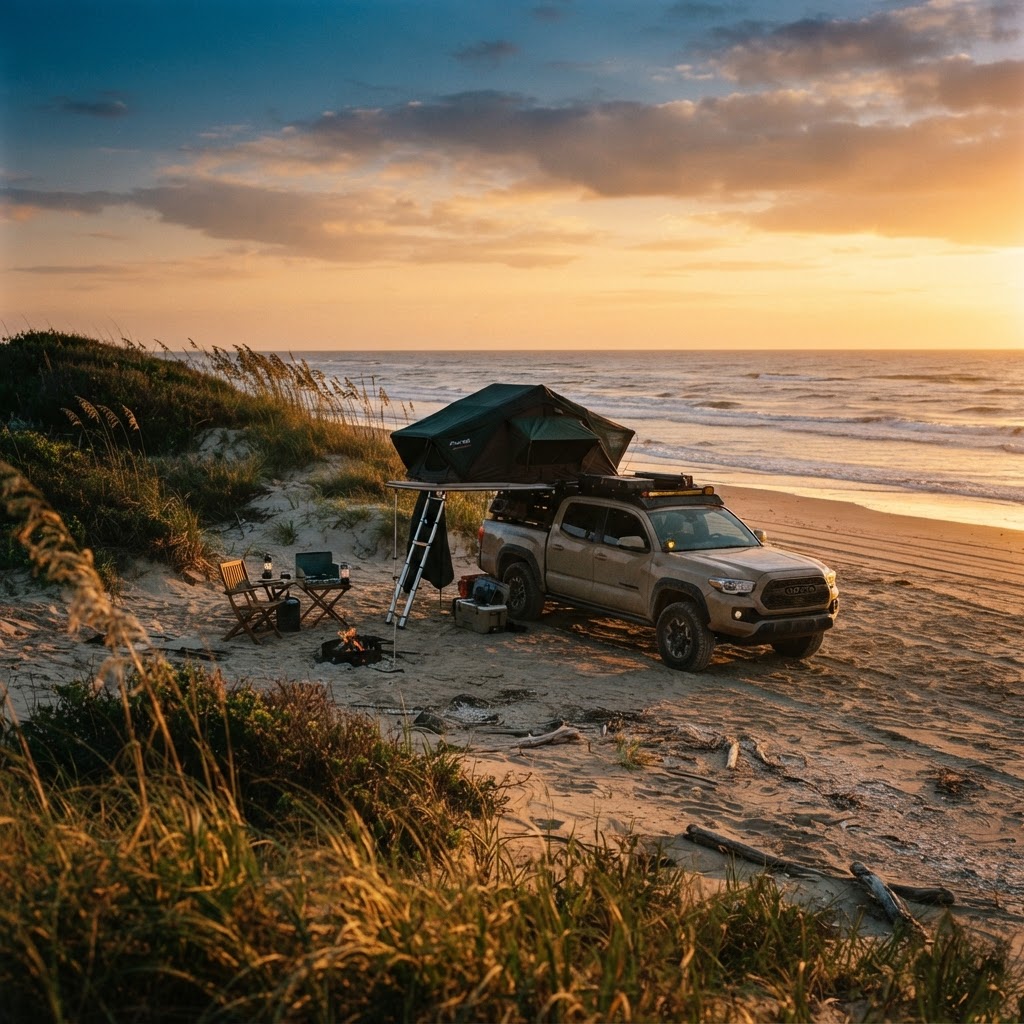
- Read the Dunes: Do not camp on the vegetation. It’s protected, and it’s there to hold the island together. Look for flat, clear sand patches behind the primary dune line.
- Wind Mitigation: The Texas coast is rarely still. Set up your camp with your vehicle acting as a windbreak for your fire pit or cooking area. If you’re using a canopy, use heavy-duty sand anchors—standard stakes will pull out of the sand in five minutes.
- Tide Awareness: Even at high tide, you want to be well above the high-water mark. Look for the line of seaweed and debris (the "wrack line"). That marks where the tide reached during the last big moon cycle. Park well above that.
The Coastal Packing List: Desert-to-Beach Survival Essentials
Since you are strictly off-grid, your packing list should be utilitarian.
- Water: Bring double what you think you need. The sun and the salt work together to dehydrate you faster than you realize.
- Fuel: If you’re pushing deep into the 60-mile stretch, remember that your fuel economy drops significantly in sand. Top off at the last station in Corpus Christi.
- Protection: The sun reflection off the sand and water is brutal. Pack long sleeves. Our Sunset Surf Run T-Shirt is built for this—lightweight, breathable, and designed to look right at home whether you’re behind the wheel or standing by a drift-log fire.
- Waste Management: You must pack out everything. Bring extra heavy-duty trash bags. There are no dumpsters in the backcountry.
Fishing, Stargazing, and Cold Beers by the Campfire
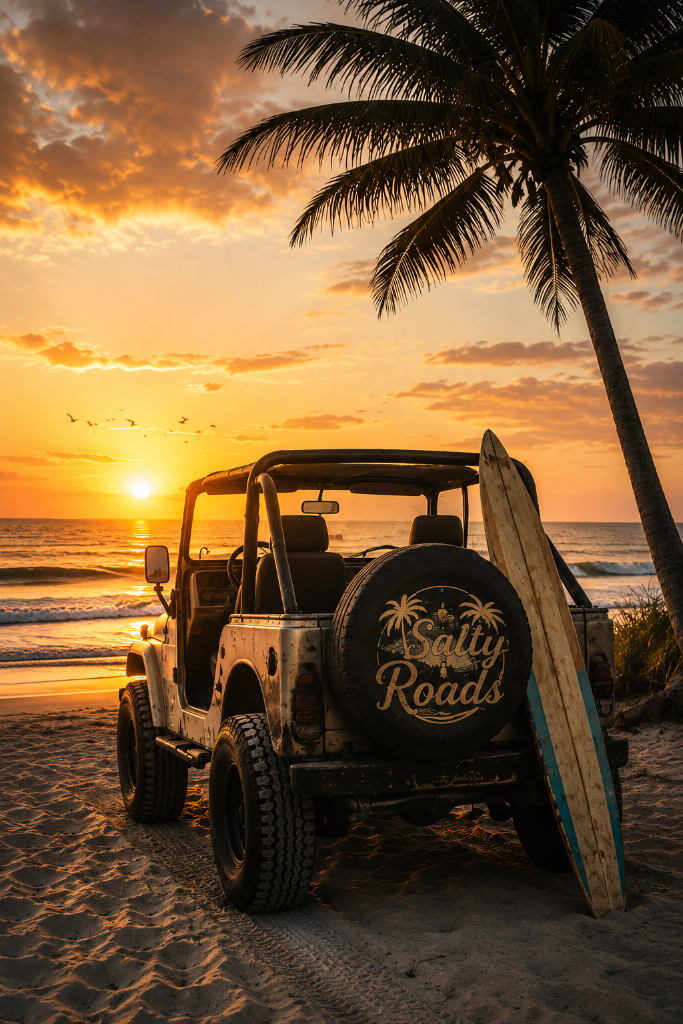
Once the sun begins to dip, the island transforms. This is the hour for the "Salty Roads" ritual. There is nothing quite like pulling a crisp beverage from the cooler and settling into a chair as the sky turns that deep, bruised purple that only coastal horizons provide.
We always keep a few Salty Roads™ - Dirty Roads & Cold Beer Pint Glasses in our kit for these moments. There’s something grounding about holding a quality glass as you watch the headlights of a passing truck trace the shoreline miles away. If you prefer a bit of thematic flair, the 16oz Tropical Off-Road Adventure Beer Pint Glass adds that island-bar vibe to a spot where the nearest "bar" is a two-hour drive away.
For the anglers, PINS is world-class. If you’re targeting redfish or speckled trout, look for the "cuts" in the sandbar where the water flows back out to sea. Fish the incoming tide, and don't be surprised if you hook into a shark or a black drum before the night is through.
Treading Lightly: Leave No Trace Rules for Texas Beaches
We want to keep these 60 miles open for the next generation of 4x4 enthusiasts, and that means absolute adherence to Leave No Trace principles.
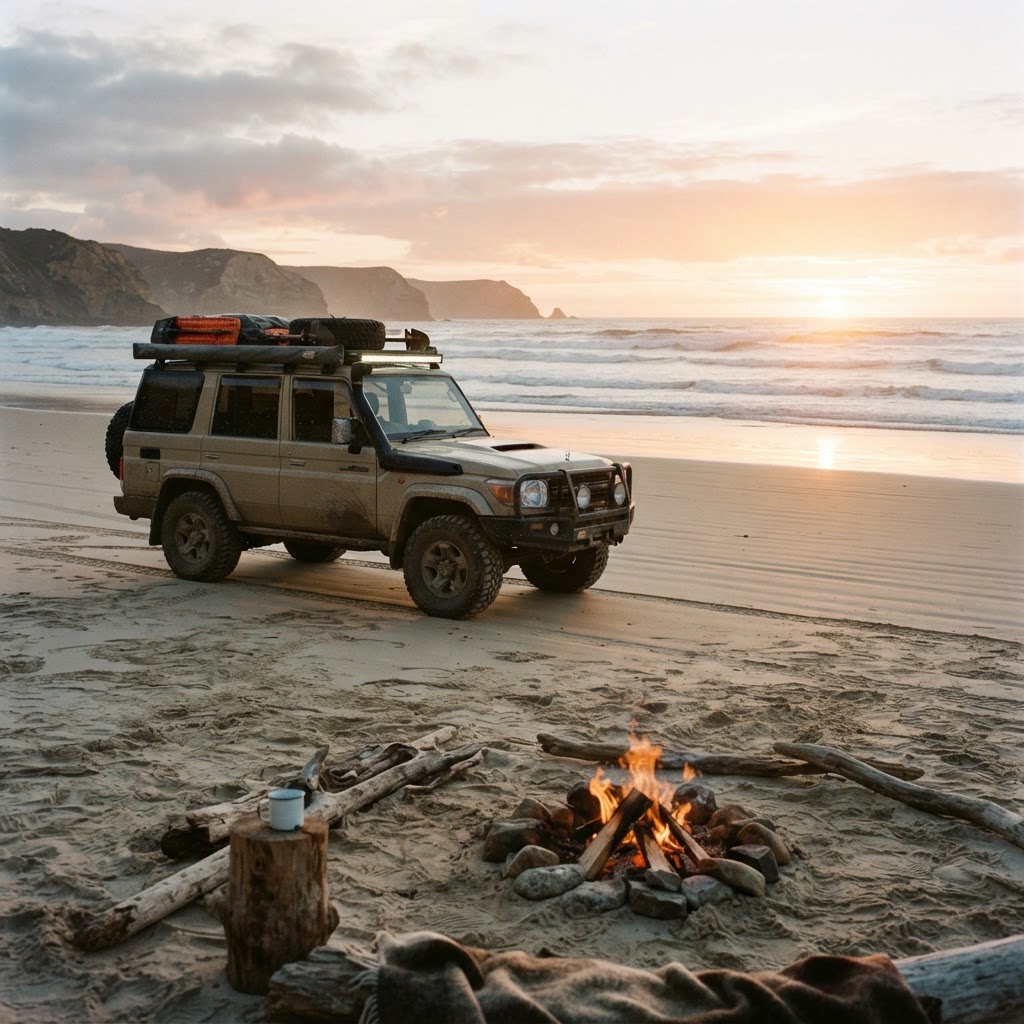
- Fire Safety: Keep fires contained in a portable fire pan or pit. Never build a fire directly on the sand, as you will leave behind nails, glass, and trash that others might step on later. If it’s windy, skip the fire entirely to prevent embers from drifting into the dry dunes.
- Human Waste: The National Park Service requires you to bury human waste at least 6-8 inches deep and at least 200 feet away from the water. If you can, bring a portable toilet system. It’s cleaner, easier, and better for the fragile ecosystem.
- Wildlife: You are sharing this space with nesting sea turtles and various shorebirds. If you see a roped-off area, steer clear. If you see a turtle, keep your distance—they are federally protected, and your presence should be as invisible as possible.
The beauty of Padre Island National Seashore is that it demands effort. It’s not a place you visit; it’s a place you endure, explore, and eventually, come to respect. Treat the sand, the dunes, and the tide with the reverence they deserve, and the island will give you a lifetime of memories in return. Just remember to pack out what you pack in, air down, and keep that cooler stocked for when the sun goes down.