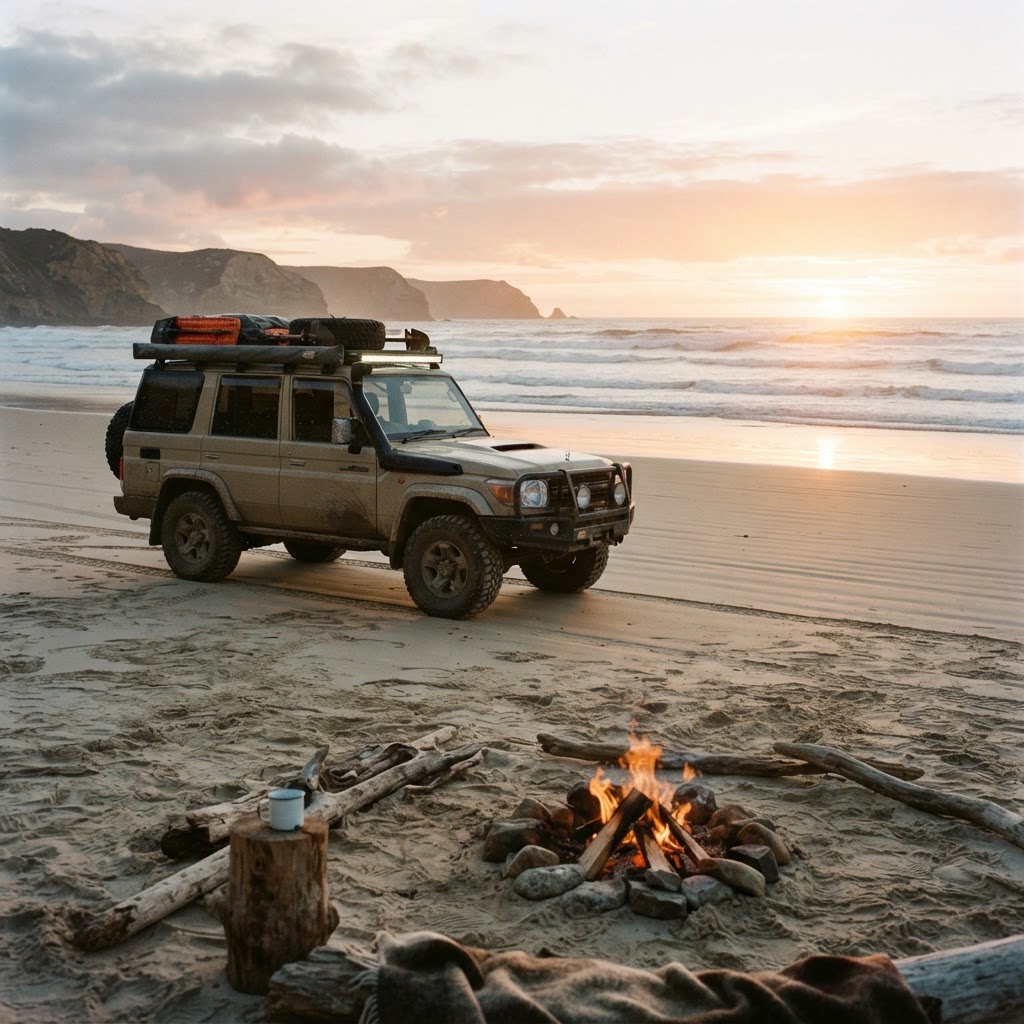
There is a specific kind of silence you can only find once you’ve crossed the sound and put miles of barrier island sand between you and the nearest paved road. If you’re tired of crowded campgrounds with neighbors parked ten feet away, it’s time to point your nose toward Cape Lookout.
Why Cape Lookout is the Ultimate Coastal Outlaw Escape
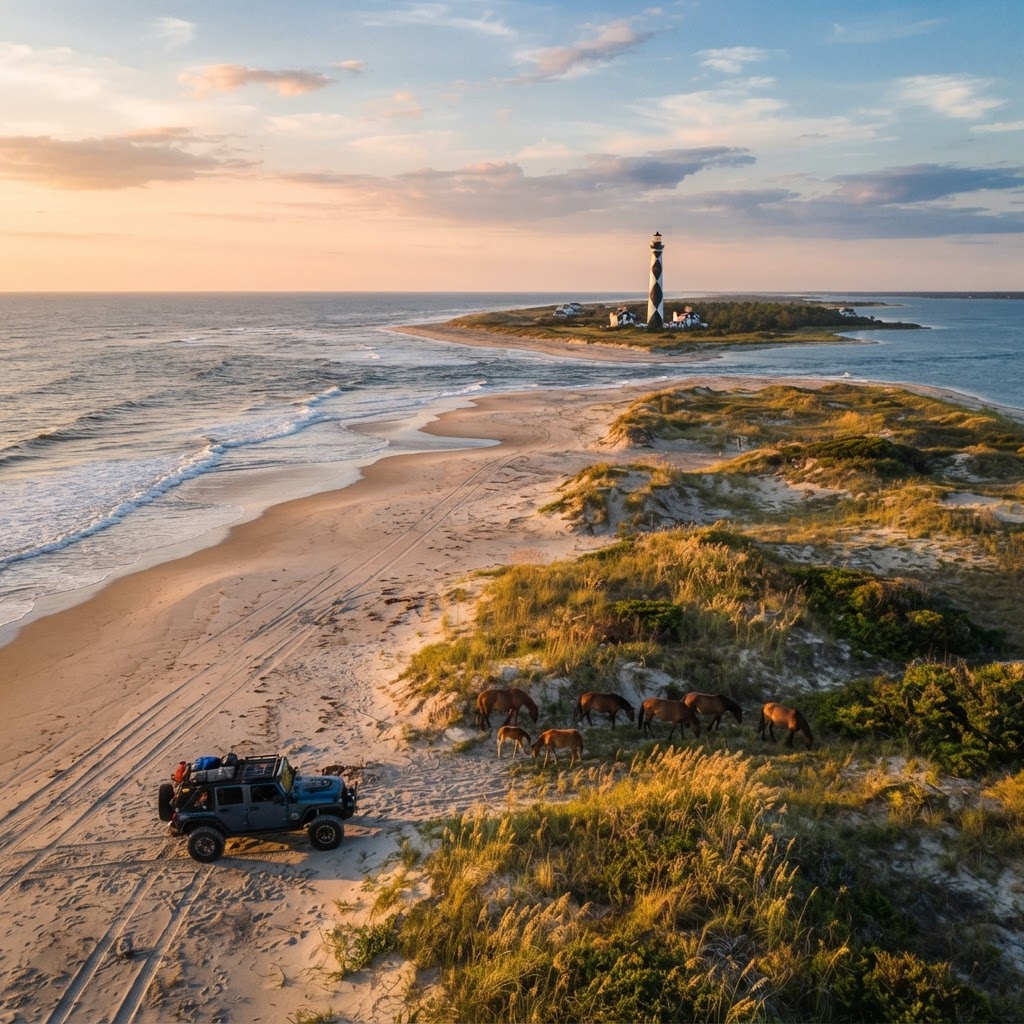
Cape Lookout National Seashore isn’t a place for the casual vacationer; it’s a rugged, 56-mile stretch of undeveloped barrier islands that demands self-sufficiency. Unlike the manicured tourist strips of the Outer Banks, this is raw, protected wilderness. Here, the Atlantic crashes against the shore without interruption, and the only "resort" amenities are the stars above your tent and the tide shifting beneath your tires. For those who view their Jeep not just as a vehicle but as a gateway to autonomy, Cape Lookout is the ultimate escape. You’re trading cell service for sea spray and neon lights for the glow of a campfire, and frankly, it’s the best trade you’ll ever make.
Getting Your 4x4 There: Vehicle Ferries and ORV Permits
The logistics of getting onto the island are the first test of your grit. Because there are no bridges to the Core Banks or Shackleford Banks, your ticket to freedom is a vehicle ferry.
- The Ferry Process: You’ll primarily be using private ferry services like Davis Shore Ferry or Morris Marina. These operators specialize in hauling lifted rigs and gear-heavy trailers across the sound. You must book these weeks—sometimes months—in advance, especially during the prime fishing windows of spring and fall.
- The Golden Rule: Be on time. If your ferry is scheduled for 8:00 AM, that’s when the ramp drops. If you aren’t there, you’re missing the tide and potentially your window to reach a decent camp spot before high water hits.
- ORV Rules: Unlike some national parks, Cape Lookout currently does not require a specific ORV permit for recreational driving, but that can change with the seasons and nesting bird closures. Always check the official National Park Service (NPS) website the morning of your departure. Respect the closures; they are marked with posts and string for a reason.
Airing Down: Deep Sand Driving Tips for Island Tracks
The sand at Cape Lookout isn't a driveway; it’s a shifting, hungry beast. If you pull off that ferry with 35 PSI in your tires, you’re going to dig yourself into a crater before you reach the dune line.
The Art of the Air-Down
Drop your tire pressure to between 15 and 20 PSI before you touch the sand. This increases the tire’s footprint, allowing you to "float" on top of the sand rather than cutting through it. If you’re hauling a heavy gear load, lean toward 18-20 PSI to prevent sidewall heat buildup, but don’t be afraid to go lower if the sand is sugar-soft and dry.
Driving Etiquette
- Momentum is King: Keep a steady, moderate pace. Sudden braking or flooring the accelerator will only spin your tires and bury your axles.
- Stay in the Tracks: If you see ruts, stay in them. They are compacted and generally the most stable path.
- Carry Recovery Gear: A set of traction boards (like Maxtrax), a heavy-duty shovel, and a kinetic recovery rope are non-negotiable. If you find yourself buried, don’t keep spinning—stop, air down more, and use your boards.
Choosing the Perfect Beach Campsite: Ocean vs. Sound Side
Once you’re off the ferry, you have the entirety of the island as your backyard. But choosing where to stake your claim is a tactical decision.
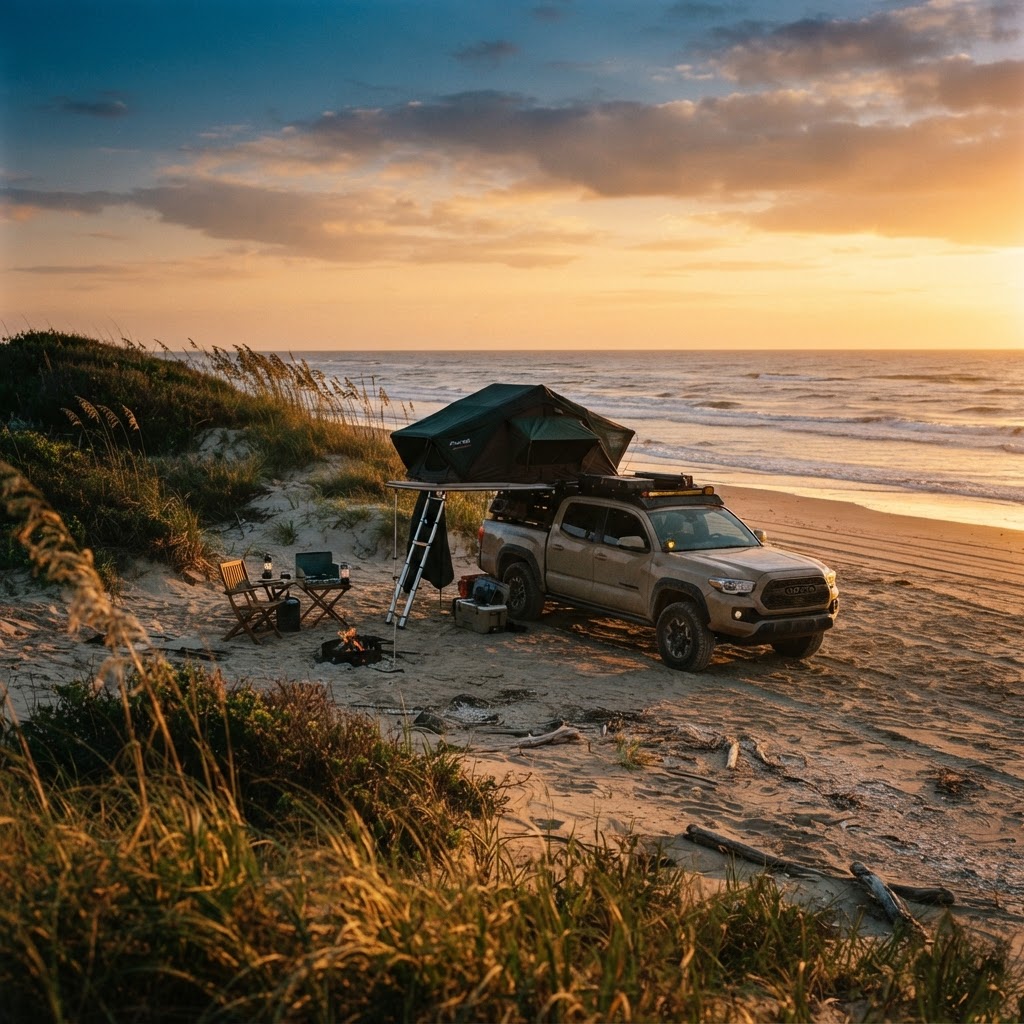
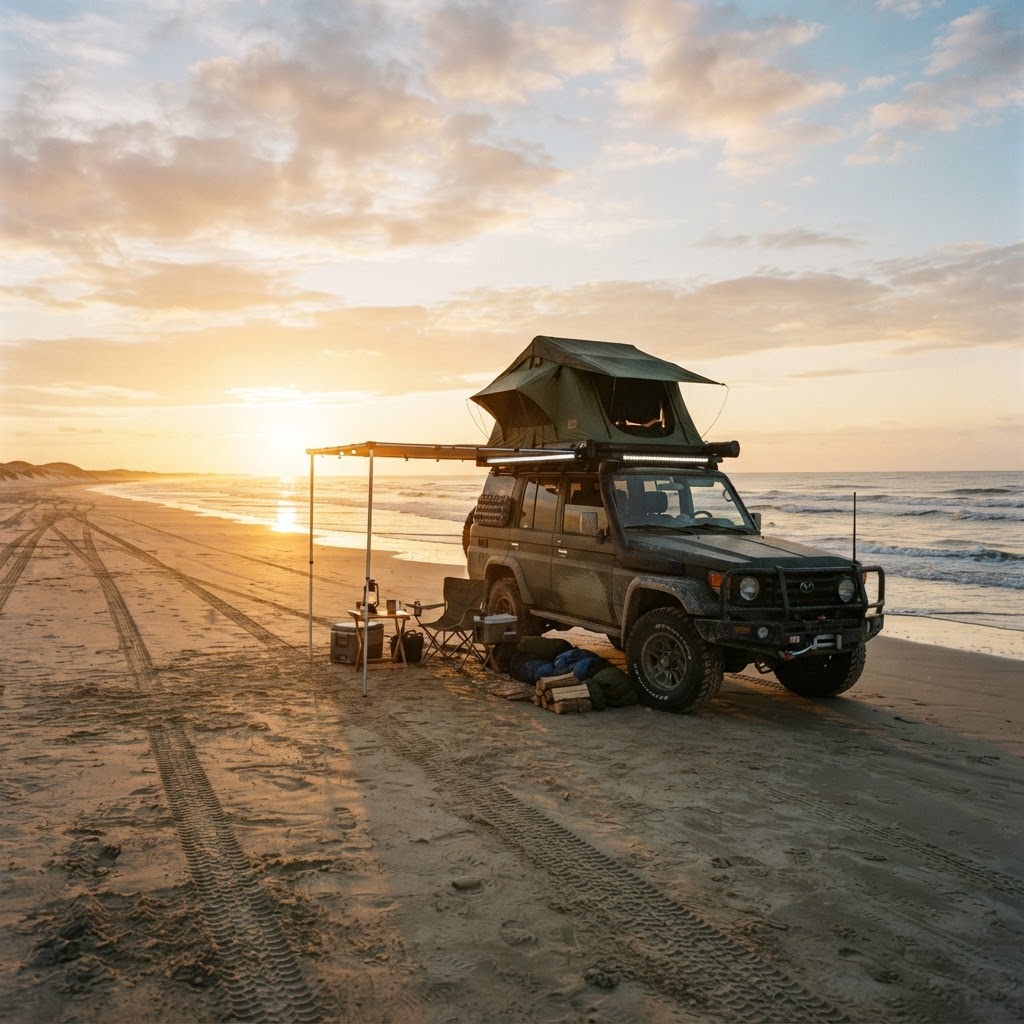
- Ocean Side: You’ll get the ocean breeze, which keeps the mosquitoes at bay, and the soundtrack of the crashing surf. The trade-off is salt spray on everything and the risk of high-tide storms. Always set up well above the high-tide line—look for the wrack line of debris to see how far the water traveled during the last storm.
- Sound Side: The water is calmer, and the fishing for drum is often better, but the trade-off is "no-see-ums" (biting midges). If you choose the sound side, prepare for a war of attrition against the bugs.
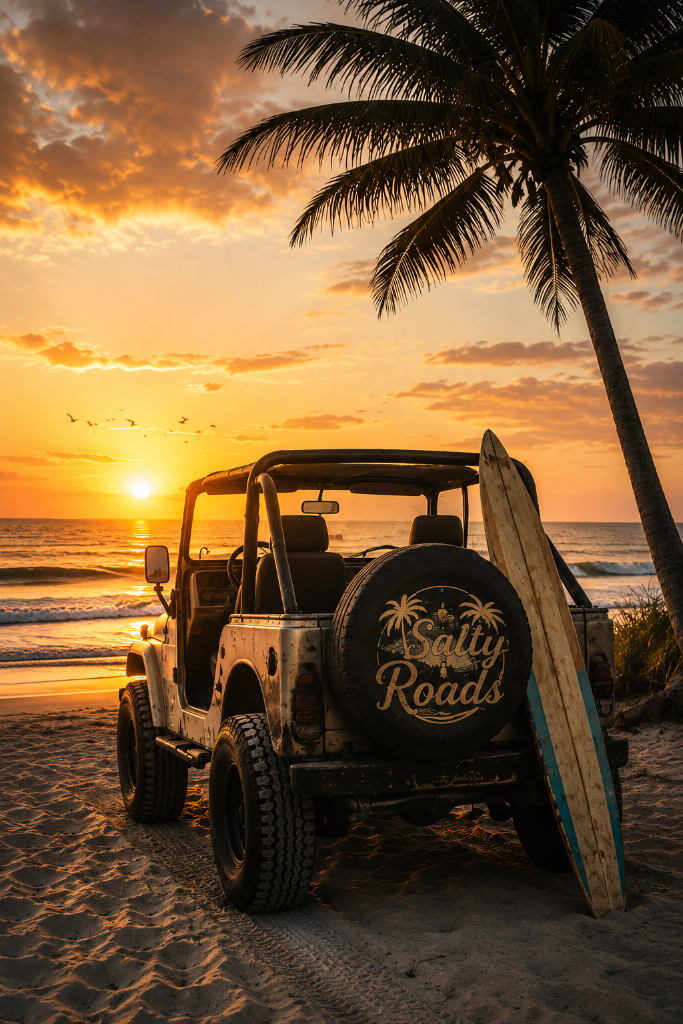
Wherever you pitch your tent, make sure your vehicle is oriented so you can make a quick exit if a storm surge arrives unexpectedly. Pulling on your Salty Roads Island Escape T-Shirt as the sun hits the horizon is the unofficial uniform of a successful camp setup.
The Off-Grid Packing List: Survival Gear, Water, and Sun Protection
Cape Lookout is a "pack-in, pack-out" environment. If you don't bring it, you don't have it.
- Fresh Water: Bring at least one gallon per person, per day, plus an extra 5 gallons for cleaning and emergencies. There is no potable water on the islands.
- Fuel and Power: Don’t rely on your Jeep’s battery for heavy gear. Bring a dual-battery setup or a portable solar generator.
- Sun Protection: The reflection of the sun off the white sand is brutal. Bring broad-spectrum sunscreen, high-quality polarized sunglasses, and a wide-brimmed hat.
- Waste Management: You must pack out all trash, including human waste if you aren't using a self-contained camp toilet. Leave the beach cleaner than you found it.
Sunset Surf Casting and Campfire Drinks
As the day cools, the fishing shifts. Cape Lookout is legendary for red drum, speckled trout, and bluefish. Cast your line just as the tide begins to turn—that’s when the predators move in close to the wash.
After the rods are set and the coals in your fire pit are glowing, it’s time to slow down. There is something primal about sitting on a tailgate in the middle of a barrier island. Pour yourself a cold drink into a Salty Roads™ - Dirty Roads & Cold Beer Pint Glass and toast to the fact that you’re miles away from a traffic jam. If you prefer a bit of dark flair, the Salty Roads Skeleton Beach Beer Pint Glass adds a nice aesthetic touch to those late-night campfire sessions. The salt air makes everything taste a bit crisper, and the lack of light pollution means the Milky Way will look like a roadmap across the sky.
Leave No Trace: Preserving the Crystal Coast
This place is fragile. The dunes are held together by thin, stubborn grasses that take decades to establish; driving over them destroys them instantly. Stick to the designated tracks. When you pack up your camp, do a final sweep for micro-trash—bottle caps, zip ties, and snack wrappers are the enemy of the local sea turtles.
When you leave, the only thing you should leave behind are your tire tracks, which the next high tide will erase for you. Cape Lookout is a privilege, not a right. Keep your speed low, your footprint small, and your respect for the environment high, and this rugged stretch of the Crystal Coast will be waiting for your return trip, year after year.
Pack your gear, double-check your recovery straps, and get out there—the sand is calling.