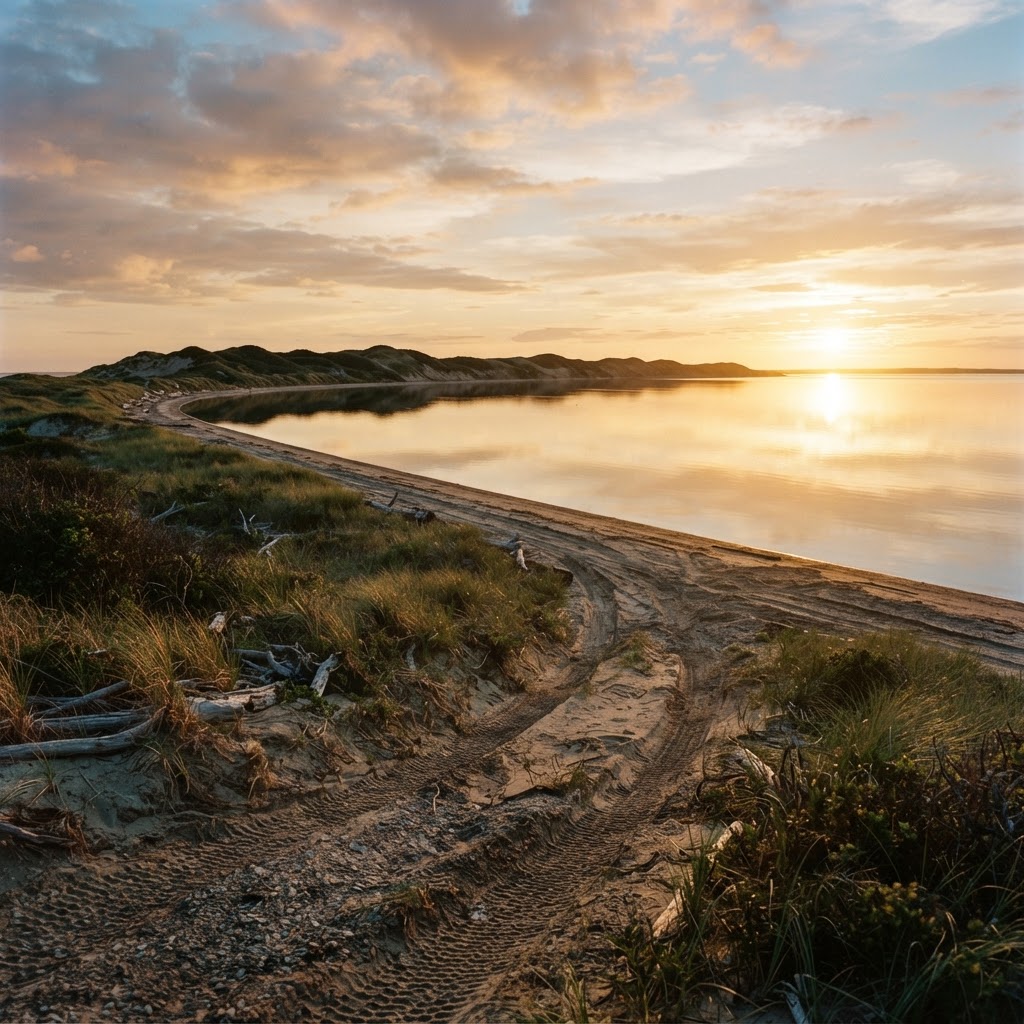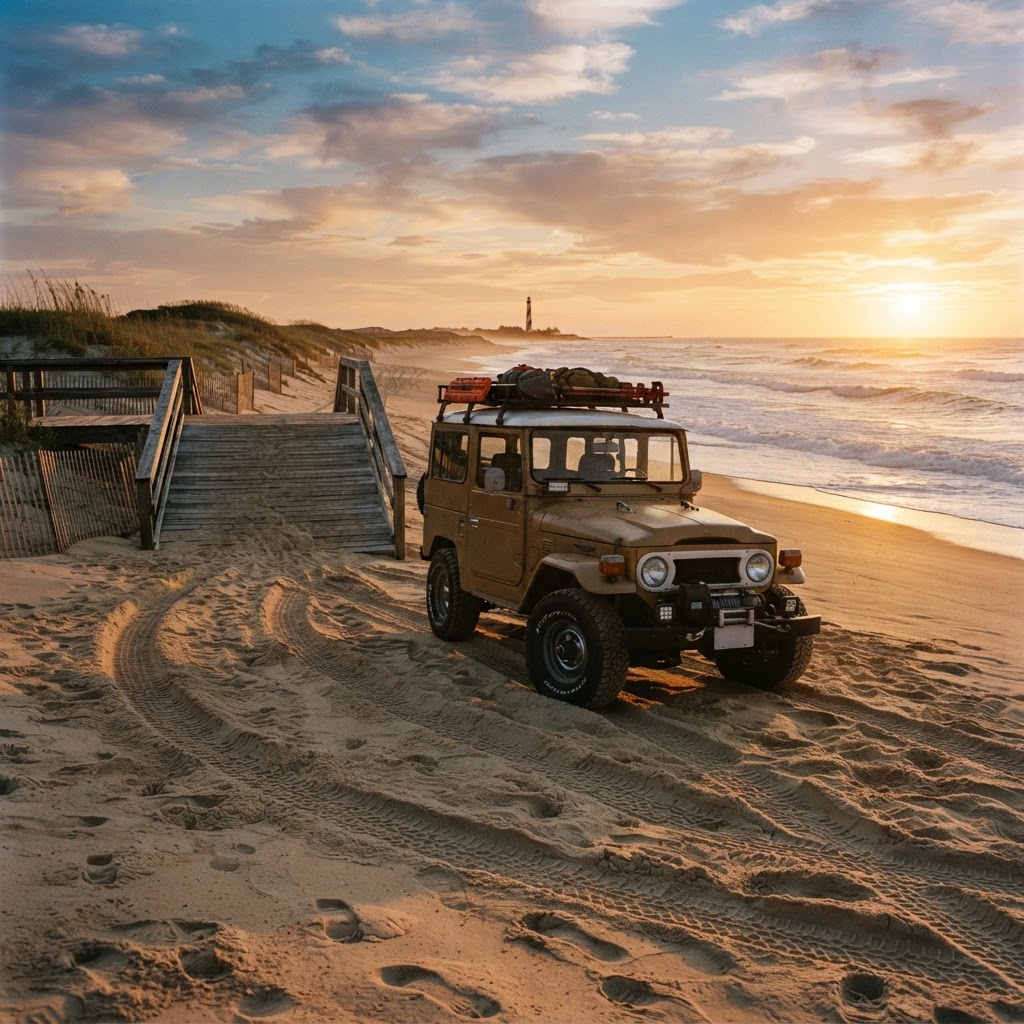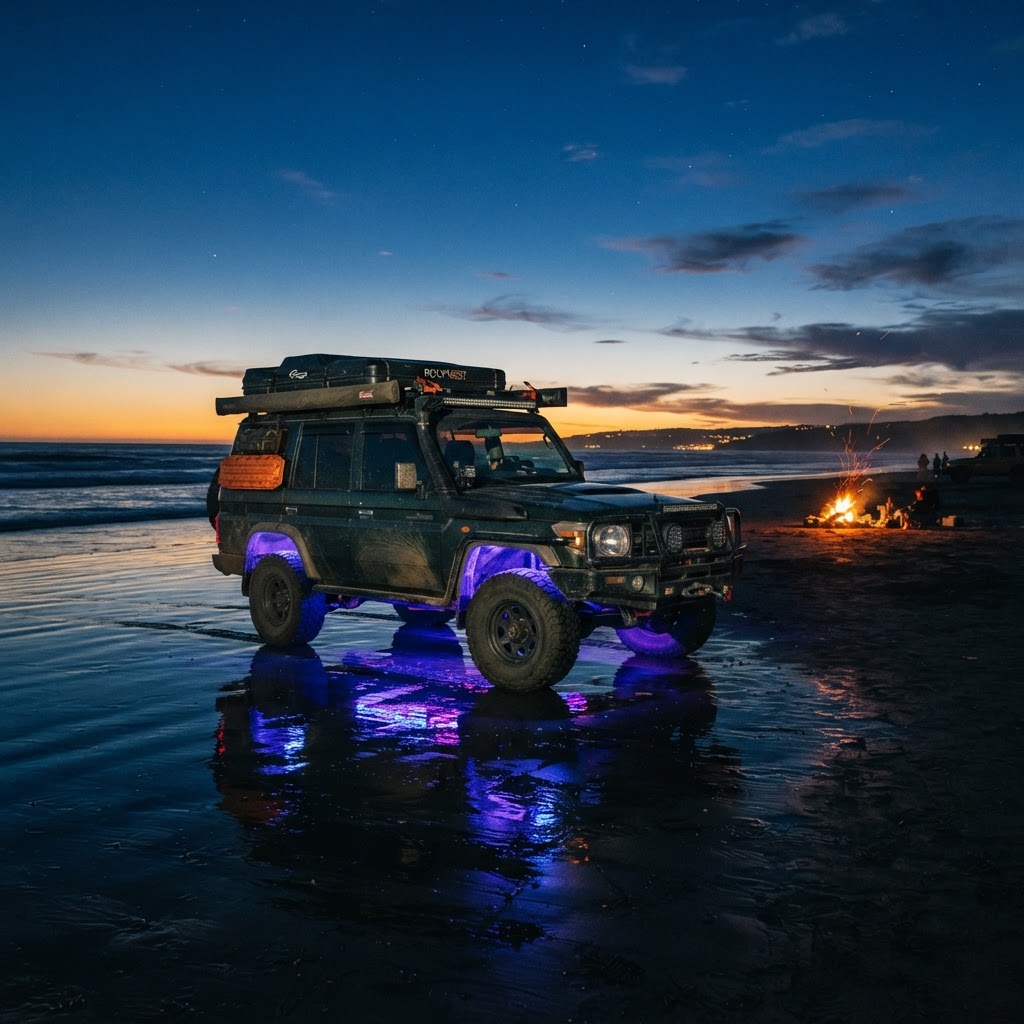
There is a specific kind of freedom that only comes when you trade asphalt for shifting grains, listening to the hum of mud-terrain tires dancing across the tide line. Whether you are chasing the perfect break or just looking for a secluded stretch of coast to disconnect, jeep beach driving is the ultimate expression of coastal living.
Why Beach Driving is the Ultimate Coastal Adventure
There is a primitive thrill in taking a machine designed for the trail and dropping it onto the edge of the Atlantic. It isn’t just about the drive; it’s about accessibility. A 4x4 allows you to skip the crowded boardwalks and the miles of dunes, putting you in spots where the only neighbors are ghost crabs and the rhythm of the surf. It turns your Jeep into a mobile basecamp, a platform for everything from sunrise surf sessions to those late-afternoon sessions where the only thing on the agenda is a cold drink and a view of the horizon.
Essential Gear: What to Pack for Off-Road Beach Recovery
Before you even think about putting your transfer case into 4-High, you need to ensure you aren't going to become the local cautionary tale. Even the most capable Wrangler can sink if you’re not prepared.
- Traction Boards: Essential for getting unstuck when your tires start spinning.
- Quality Recovery Strap: A kinetic rope is better than a standard tow strap for shock-loading out of deep ruts.
- D-Ring Shackles: Ensure you have rated recovery points on your bumper.
- Collapsible Shovel: You’ll be digging yourself out—or helping someone else—more often than you think.
- Tire Pressure Gauge and Deflator: Precision matters when you are fighting the soft stuff.
Airing Down: The Golden Rule of Driving Your Jeep on Sand
If you learn one thing from this guide, let it be this: never attempt beach driving at highway tire pressure. High pressure causes your tires to act like pizza cutters, slicing down into the sand until you are resting on your frame rails.
By "airing down"—lowering your tire pressure to between 15 and 20 PSI—you increase your tire’s footprint, effectively distributing the weight of the vehicle over a larger surface area. You want your tire to float on top of the sand, not plow through it. Always remember to bring a portable 12V air compressor so you can inflate back to street pressure before you hit the pavement; driving on asphalt with aired-down tires will destroy your rubber and make your handling dangerously unstable.
Navigating the Tides: How to Avoid a Saltwater Washout
The ocean is the ultimate master of your schedule. Before you head out, download a tide chart app like Tides Near Me. Never drive on the beach during high tide. Not only does the incoming water soften the sand, but it can quickly trap your vehicle against the dunes.
Aim to drive during the three-hour window before or after low tide. The sand is most compact and "driveable" at the low-tide line, where the water has recently receded. Avoid the "shell line"—that dry, loose, powdery sand that usually forms near the dunes. It’s a death trap for tires. If you have to traverse it, keep your momentum steady and do not—I repeat, do not—slam on the brakes.
The Best 4x4 Drive-On Beaches on the East Coast
The East Coast offers some of the most iconic sand-driving experiences in the country, provided you know where to look and have the correct permits.
- Outer Banks, North Carolina (Corolla/Carova): This is the holy grail. There are no paved roads leading to the northernmost beaches here; the beach is the road. You’ll share the sand with the famous wild horses, so keep your speed down and your eyes peeled.
- Cape Lookout National Seashore, NC: Accessible only by ferry, this is pure, unadulterated off-roading. It’s remote, rugged, and requires a high level of self-sufficiency.
- Island Beach State Park, New Jersey: A rare gem in the North, this park offers miles of permitted beach driving. You’ll need a mobile sport fishing permit, but the access to prime surf-fishing spots is unparalleled.
- Assateague Island, Maryland/Virginia: Famous for the ponies and the solitude. It’s a protected environment, so stay within the marked ORV corridors to preserve the dunes.
Tailgate Setup: Creating the Perfect Sunset Drink Station
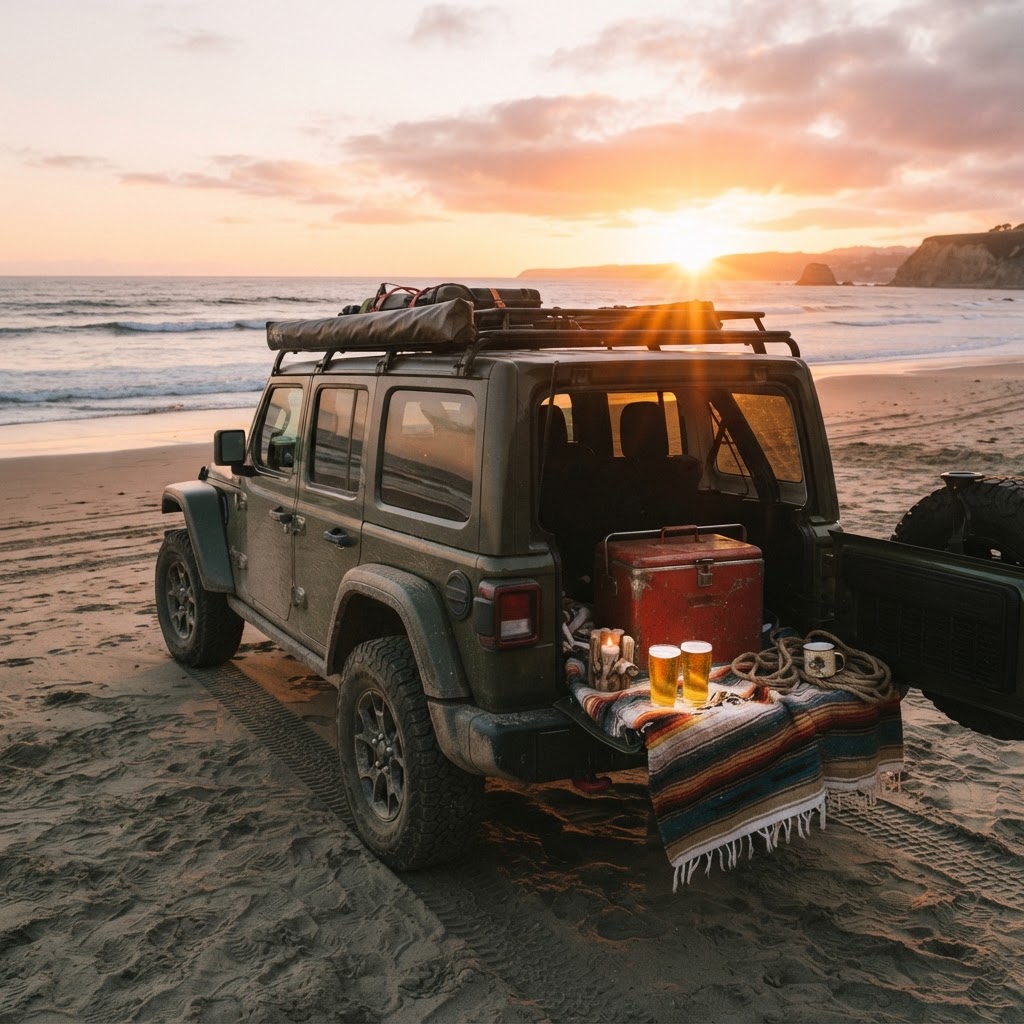
Once you’ve found your spot, parking parallel to the waves is the ultimate move. Drop the tailgate, kick back, and let the beach do the rest. A good setup is all about comfort. Keep a stash of blankets and perhaps pull on a Salty Roads™ Sunset Escape - Coastal Adventure Tee to keep the chill off as the sun dips below the horizon.
For the true enthusiast, the tailgate isn't just for gear storage; it’s a bar. We keep an Off-Road Tropical Sunset Beer Pint Glass in the glovebox specifically for the golden hour. There is something satisfying about enjoying a crisp beverage from quality island-inspired barware while the salt spray hits the tailgate. If you’re heading out with a crew, make sure everyone is rocking their favorite Sunset Surf Run T-Shirt—there’s a shared unspoken code among Jeep drivers on the sand, and a little bit of shared style goes a long way toward cementing the camaraderie.
Post-Beach Jeep Maintenance: Washing the Salt Away
Salt is the enemy of every nut, bolt, and frame rail on your Jeep. It doesn't matter if you have a brand-new JL or a vintage CJ; salt air and sand will start the corrosion clock the moment you step off the sand.
- The Undercarriage Flush: This is non-negotiable. Use a high-pressure wand at the local car wash to blast out the wheel wells, the inside of the frame rails, and behind the bumpers. If you don't get the salt out, it will sit there and eat your metal from the inside out.
- Exterior Rinse: Give the body a thorough wash, focusing on any seams or crevices where sand likes to hide.
- Interior Detail: Sand has a way of migrating into the dash, the gear shifter, and the seat rails. A portable shop-vac is your best friend. Get it all out before it starts grinding away at your upholstery.
- Lubrication: After a deep wash, it’s a good practice to check your door hinges and hood latches. A quick spray of silicone lubricant can keep the salt from seizing your moving parts.
Driving on the beach is more than a hobby—it’s a lifestyle. It’s about respecting the ocean, understanding the limits of your machine, and knowing that at the end of the day, there is no better place to be than parked at the water's edge, counting the waves, and planning the next run. Keep your tires aired down, your gear ready, and your salt tolerance high. See you out there.