There's a moment — usually around 6:30 PM in the summer, a little earlier in fall — when the whole coastline changes. The harsh midday glare softens. The water turns from blue to gold to molten copper. The air cools just enough to roll the windows down. And if you're on the right road, pointed west, you get to chase that light until it disappears.
That's the magic of a coastal sunset drive. It's not about the destination. It's about the golden hour, the road, and the way salt air and fading light conspire to make you forget about everything else.
We've rounded up the 10 best coastal sunset drives in America — routes where the golden hour hits different, where the pull-offs are worth stopping for, and where the drive itself is the experience. Pack a cooler, grab your favorite playlist, and let's go.
1. Pacific Coast Highway — Big Sur, California
Route: Carmel-by-the-Sea to San Simeon (approx. 72 miles) Best sunset months: September–November (clear skies, no marine layer)
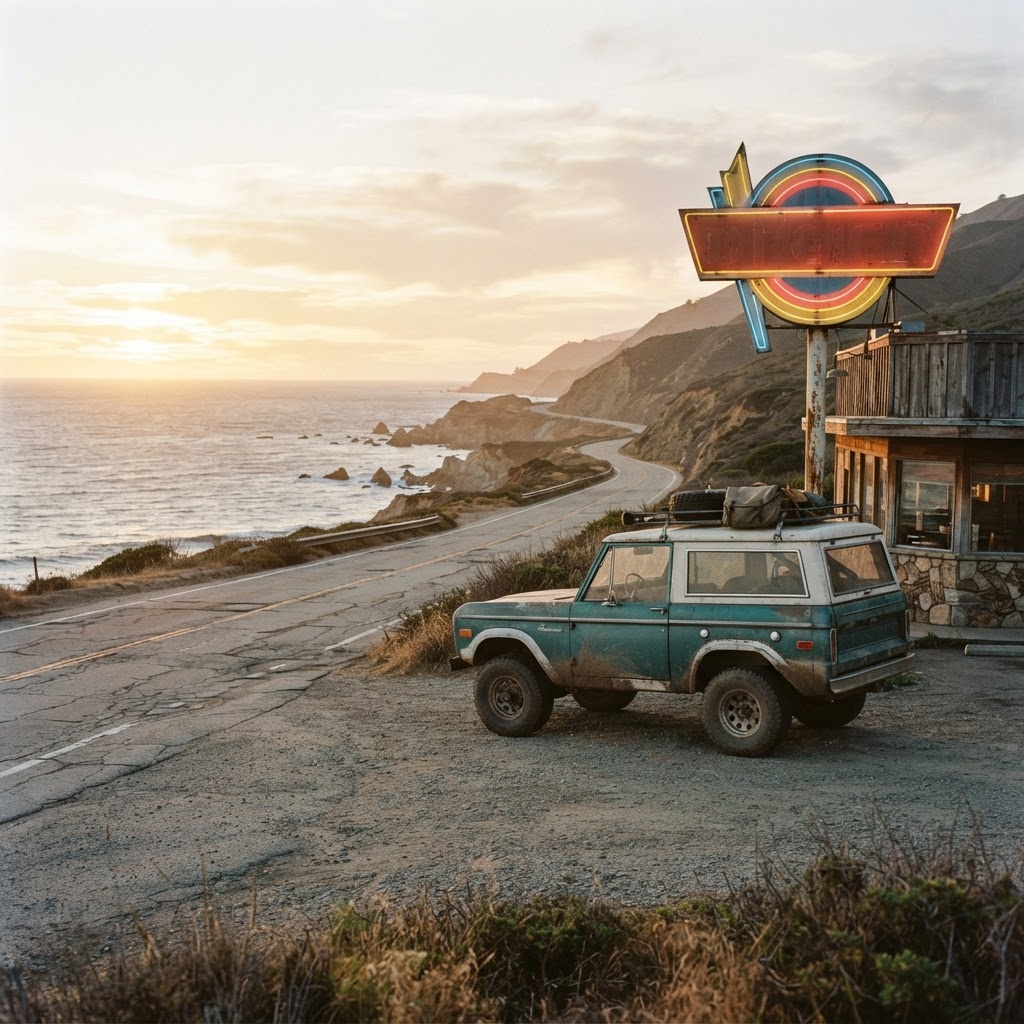
This is the one. The drive that launched a million screensavers. The Pacific Coast Highway through Big Sur is arguably the most beautiful stretch of coastal road in the country, and at golden hour, it transcends description.
The sun drops directly into the Pacific here, painting the cliffs and the Bixby Creek Bridge in warm amber light. Pull off at Garrapata State Park for unobstructed ocean views, or stop at the Nepenthe restaurant in Big Sur for a sunset dinner on the cliffside terrace.
Pro tip: Check road conditions before you go — Highway 1 through Big Sur is prone to closures from landslides, especially in winter. In fall, the marine layer usually burns off by afternoon, giving you clear skies for sunset.
What to bring: Layer up — even in summer, the coast gets chilly once the sun drops. A good coastal adventure tee and a light jacket are your best friends here.
2. Overseas Highway — Florida Keys
Route: Key Largo to Key West (approx. 113 miles) Best sunset months: Year-round, but October–April for the clearest skies
Driving the Overseas Highway at sunset is like driving across the surface of the ocean. For long stretches, there's nothing but water on both sides of you — turquoise to the east, gold and pink to the west — connected by 42 bridges that seem to float above the sea.
The crown jewel is the Seven Mile Bridge, where the sun sets directly ahead if you're driving toward Key West. Time it right and you'll feel like you're driving into a painting.
End your drive at Mallory Square in Key West, where the nightly Sunset Celebration turns sunset-watching into a full-blown party with street performers, food vendors, and a crowd that gathers every single evening to applaud the sun going down.
Pro tip: Leave Key Largo by 4:00 PM if you want to catch sunset at Mallory Square (typically 7:30–8:15 PM depending on season). The drive takes 3.5–4 hours with stops.
3. Hana Highway — Maui, Hawaii
Route: Kahului to Hana (approx. 64 miles, 620 curves, 59 bridges) Best sunset months: May–October (dry season)
Okay, technically this one isn't in the continental US, but we'd be doing you a disservice to leave it off. The Road to Hana is legendary — narrow, winding, and lined with waterfalls, black sand beaches, and bamboo forests.
For sunset, the play is to drive it in the late afternoon and arrive at Hamoa Beach or Wai'anapanapa State Park (black sand!) near Hana just as the light softens. The sun sets behind the West Maui Mountains from this side of the island, casting the jungle and coastline in deep green-gold light.
Pro tip: Most tourists drive the Hana Highway in the morning and head back in the afternoon. Going against the flow means fewer cars ahead of you and a more peaceful golden hour.
4. Blue Ridge Parkway — Asheville to Mount Mitchell, North Carolina
Route: Asheville to Mount Mitchell State Park (approx. 33 miles) Best sunset months: October (peak fall foliage)
This one's not on the ocean, but it's coastal-adjacent in spirit — the Blue Ridge Mountains rise like a green wave above the Piedmont, and at 6,684 feet, Mount Mitchell is the highest point east of the Mississippi.
In October, when the leaves turn, this drive at sunset is otherworldly. The golden light hits the ridgelines and turns the rolling mountains into layers of fire — orange, red, gold, and deep purple fading into the distance.
Pull off at Craggy Gardens (milepost 364) for panoramic views, or drive all the way to the Mount Mitchell observation deck for a sunset above the clouds.
Pro tip: Bring a jacket. At 6,000+ feet, temperatures at sunset can be 20–30 degrees cooler than in Asheville.
5. Outer Banks Scenic Byway — North Carolina
Route: Nags Head to Ocracoke (approx. 138 miles, including ferry) Best sunset months: September–November
The Outer Banks Scenic Byway is a different kind of coastal sunset drive — flat, wild, and unhurried. You're not climbing cliffs; you're skimming along barrier islands where the ocean and sound are separated by a ribbon of sand.
Time your drive to catch the Hatteras-Ocracoke ferry at golden hour. The 40-minute ferry ride across the Pamlico Sound at sunset is one of the most underrated experiences on the East Coast. The water goes flat and glassy, reflecting the entire sky.
On Ocracoke, park at the lighthouse or head to the western (sound) side of the island to watch the sun sink into the water — a rare treat on the East Coast.
Pro tip: The ferry runs on a first-come, first-served basis. Arrive 30–45 minutes before your desired departure time, especially in summer and fall.
6. Highway 1 — Acadia National Park, Maine
Route: Bar Harbor loop + Park Loop Road (approx. 27 miles) Best sunset months: September–October (fall colors + clear skies)
Acadia is one of the few places on the East Coast where you can watch the sunset over the ocean — from the top of a mountain. Cadillac Mountain (1,530 feet) offers a 360-degree view of Frenchman Bay, the Porcupine Islands, and the infinite Atlantic.
The Park Loop Road winds along the rocky coast past Sand Beach, Thunder Hole, and Otter Cliff, each one a worthy sunset stop. But the real move is driving (or hiking) up Cadillac Mountain for sunset — the first place in the US to see sunrise, and one of the last to see sunset.
Pro tip: From mid-October through March, Cadillac Mountain requires a vehicle reservation for sunrise (but not sunset). Check the NPS website for current requirements.
7. Highway 30-A — Florida Gulf Coast
Route: Destin to Panama City Beach via Scenic 30-A (approx. 28 miles) Best sunset months: October–April (comfortable temps, fewer crowds)
Highway 30-A is the anti-interstate — a two-lane coastal road that threads through some of the most charming beach communities in Florida: Seaside, Rosemary Beach, WaterColor, Grayton Beach. The speed limit is low, the bike path runs parallel, and the dune lakes (one of only a few places in the world where freshwater lakes meet the Gulf) are stunning at golden hour.
Pull off at Grayton Beach State Park for a sunset walk on sugar-white sand, or grab a spot on the deck at The Red Bar in Grayton Beach for sunset cocktails with live music.
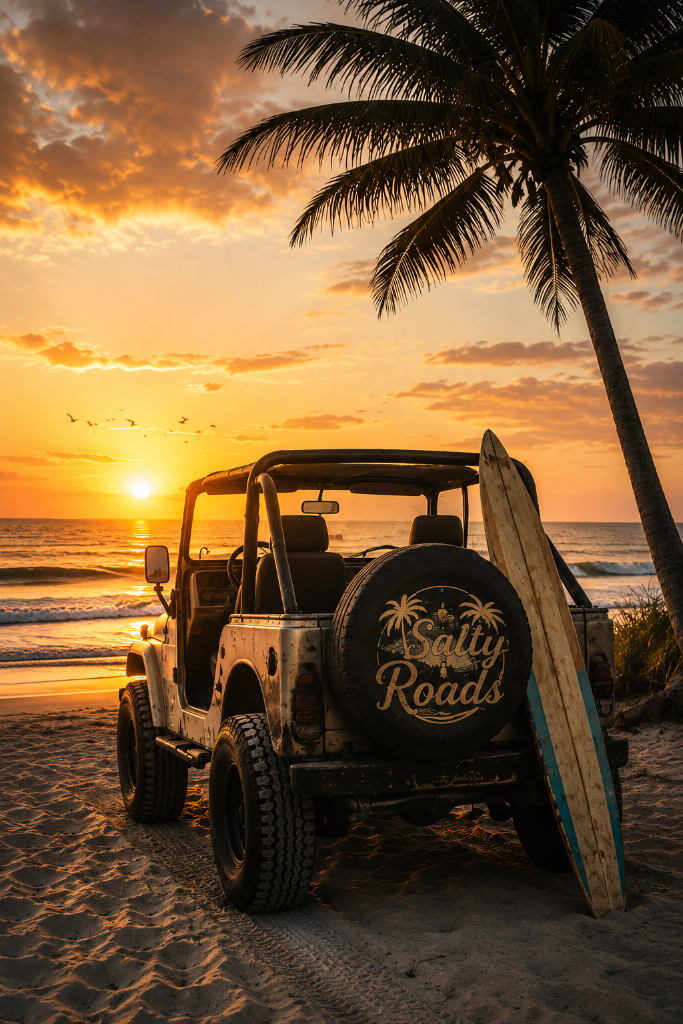
The Gulf Coast sunsets are legendary — the flat horizon means the sun drops straight into the water, painting the sky in cotton-candy pinks and oranges.
Pro tip: Time your drive for 30 minutes before sunset and stop wherever you are when the light peaks. Every beach access along 30-A offers a front-row seat.
8. Point Reyes National Seashore — California
Route: Sir Francis Drake Boulevard to the Point Reyes Lighthouse (approx. 40 miles from Highway 101) Best sunset months: September–November (clear, warm, no fog)
Point Reyes is a wild, windswept peninsula north of San Francisco that juts out into the Pacific like a fist. The drive out takes you through rolling dairy farms, coastal prairie, and finally to the dramatic headlands at the lighthouse.
At sunset, the light here is almost cinematic — the cliffs glow, the ocean turns deep blue-black, and if you're lucky, you'll spot Tule elk grazing in the golden fields along the road.
Pro tip: The road to the lighthouse closes at sunset, so arrive by 5:00 PM (depending on season). You can walk the steps down to the lighthouse viewpoint, but the best sunset spot is actually from the Chimney Rock trailhead, looking back east across Drakes Bay.
9. Cape Hatteras National Seashore — North Carolina
Route: Oregon Inlet to Hatteras Village (approx. 50 miles) Best sunset months: September–October
Yes, we mentioned the Outer Banks earlier, but the drive down Hatteras Island deserves its own entry. This stretch of Highway 12 is pure coastal wilderness — the ocean on your right, the Pamlico Sound on your left, and nothing but sand, sea oats, and sky.
The sunset here is a two-for-one: the sun sets over the sound (to your left if you're driving south), which means calm, reflective water that turns into a mirror. But the ocean side catches the afterglow, and the dunes glow in the warm light.
Stop at the Cape Hatteras Lighthouse for a silhouette shot against the sunset sky, or pull off at one of the many beach access points along the way.
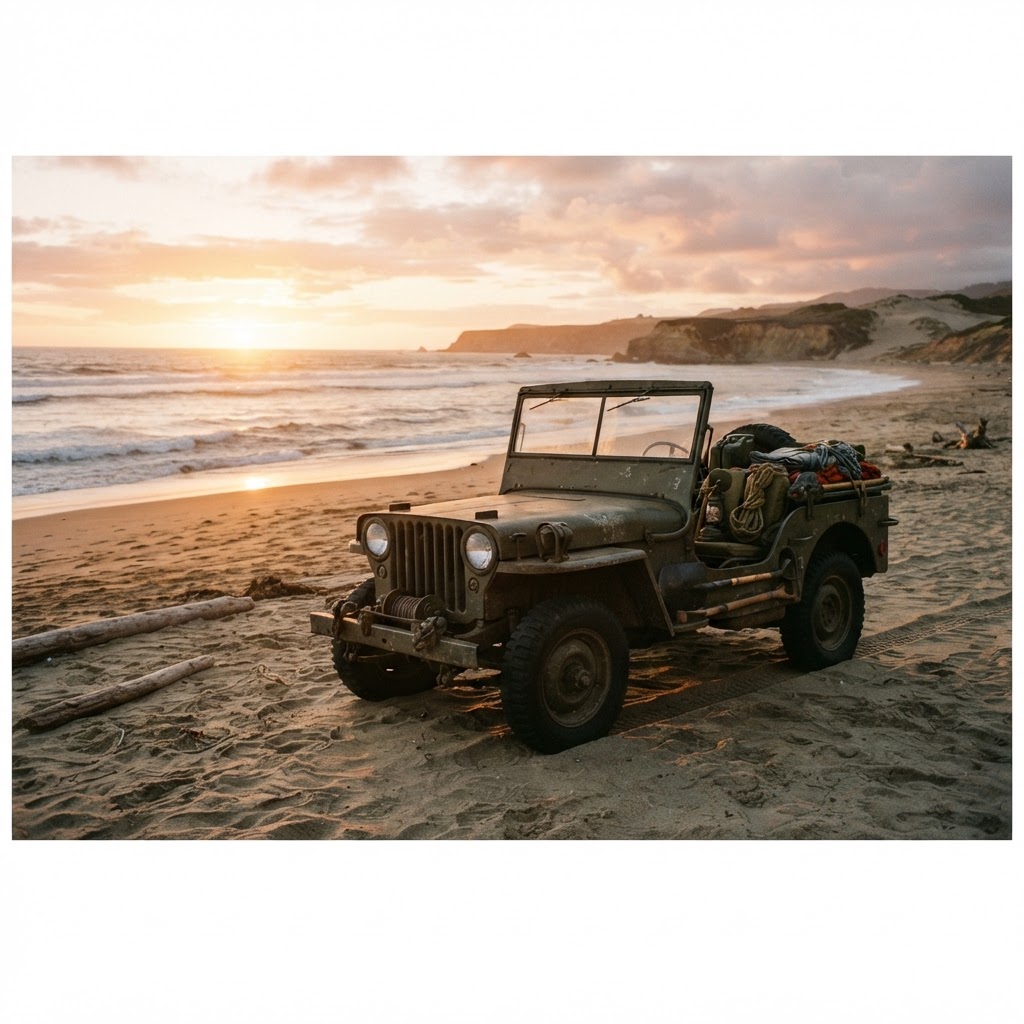
Pro tip: If you have a 4WD vehicle, you can drive on the beach in designated areas south of the ORV ramp at Hatteras Inlet. Watching the sunset from your truck on the sand, with a cold beer in hand, is peak Salty Roads.
10. Million Dollar Highway — Ouray to Silverton, Colorado
Route: US 550, Ouray to Silverton (approx. 25 miles) Best sunset months: September (fall colors)
Wait — Colorado? On a coastal drive list? Hear us out. This drive isn't coastal, but it's the most dramatic golden-hour drive in America, and the Salty Roads community loves a good off-the-beaten-path adventure.
The Million Dollar Highway climbs through the San Juan Mountains with no guardrails, sheer drop-offs, and switchbacks that'll make your palms sweat. At sunset in September, when the aspens are turning gold, the light hits the mountainsides and the entire valley glows.
It's not the ocean, but it's the same feeling — that sense of being small in the face of something vast and beautiful, with the windows down and the day winding down.
Pro tip: Drive south (Ouray to Silverton) so you're on the inside lane, not the cliff-side. And if heights aren't your thing, pull over and just enjoy the view — the destination isn't worth the stress.
What to Pack for a Sunset Drive
A great sunset drive is 10% planning and 90% vibe. Here's what we always have in the truck:
- A cooler with cold drinks — Pour that sunset beer into a proper glass. The Tiki Beer Pint Glass with Tropical Beach Sunset Artwork from Salty Roads was literally designed for this moment.
- A blanket or beach chairs — Because the best sunsets are the ones you stop for.
- A camera (or at least a charged phone) — Golden hour is photographer's gold. Shoot in the last 20 minutes before the sun disappears for that warm, directional light.
- Layers — Coastal temps drop fast after sunset. A good coastal adventure tee under a light hoodie covers you from warm afternoon to cool evening.
- Snacks — You'll inevitably stay longer than planned.
- A designated driver — If you're cracking open beers at sunset, make sure someone else is behind the wheel for the drive home.
The Art of the Sunset Stop
The temptation on any scenic drive is to keep moving — to cover ground, to make progress. But sunset drives have a different rhythm. The goal isn't to get there. The goal is to be here.
When the light peaks, stop. Pull off. Get out. Put your feet on the ground and watch. It's ten minutes of your life that you'll remember longer than the three hours of driving before it.
And when the last light fades and the sky turns from gold to deep blue to stars, pour yourself one more drink, toast the horizon, and drive home slow.
That's the Salty Roads way. 🌅