The sun-drenched trails of the Outer Banks and the rugged, salt-sprayed tracks of the Baja peninsula demand more than just a capable rig; they demand an organized one. If you’ve ever spent twenty minutes digging for a tire pressure gauge buried under a pile of damp towels and sandy flip-flops, you know that modular Jeep storage isn't just an aesthetic choice for 2026—it’s a necessity for those of us who live life on the edge of the tide.
The Rise of Modular Jeep Storage in 2026 Overlanding
In the early days, "packing" meant throwing everything into the back and hoping the sheer weight of the cooler kept the pile from shifting on the dunes. But 2026 has brought a shift toward the "Micro-Habitation" philosophy. As Jeep owners push further into remote coastal alcoves, the need to compartmentalize gear based on frequency of use has become the gold standard. Whether you’re running a two-door Wrangler or a Gladiator, the goal is to keep your center of gravity low, your visibility high, and your most vital recovery gear accessible within ten seconds or less.
MOLLE Window Panels: Maximizing Your Vertical Space
If you aren’t utilizing your rear side windows, you’re leaving precious square footage on the table. MOLLE (Modular Lightweight Load-carrying Equipment) panels have moved from military surplus to the apex of Jeep interior design.
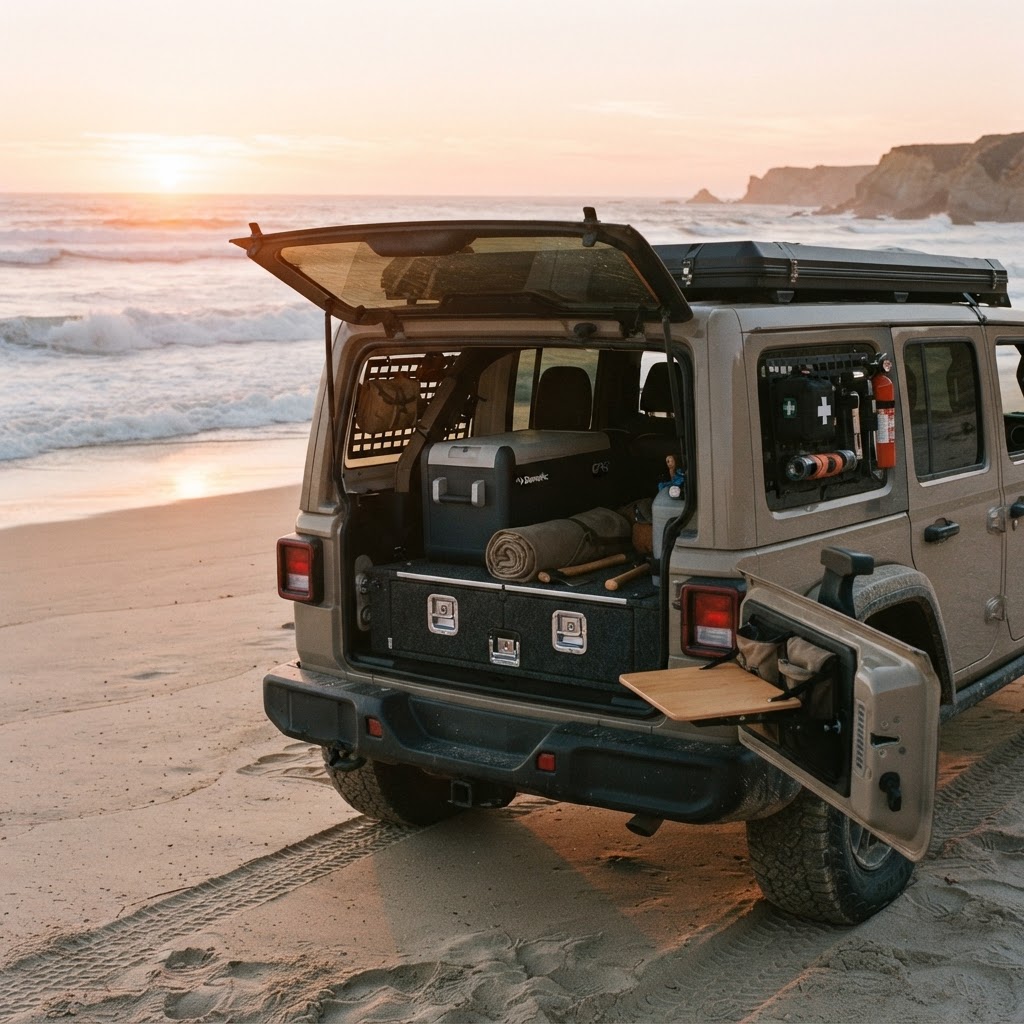
By bolting these laser-cut steel or high-density polymer panels to your rear interior roll bars, you effectively turn empty air into a vertical staging area. This is where you store your non-negotiables: a handheld VHF radio for communicating with your beach convoy, a dedicated flashlight, or a first-aid kit. I recommend mounting a small "ditch bag" here—something quick-release that you can snatch if you have to abandon ship during an unexpected high-tide surge or if you’re heading out for a quick hike up to the dunes.
Sliding Cargo Drawers for Heavy-Duty Beach Gear
For those who haul everything from heavy kinetic ropes to cast-iron skillets for beachside cookouts, a sliding cargo drawer system is the foundation of a clean build. In 2026, the trend has moved toward lightweight aluminum frames rather than heavy steel, preventing the "tail-heavy" sag often seen on stock suspensions.
- Top Drawer: Dedicated to recovery gear. Keep your soft shackles, snatch block, and tree-saver straps here. Using foam inserts keeps them from rattling like a bag of bolts on washboard sand.
- Bottom Drawer: Food and utility. Use this for your heavier, less-frequently used items like extra fuel canisters (if stored appropriately), high-lift jack bases, or your specialized beach-cook gear.
When you reach the dunes of Pismo or the remote stretches of Padre Island, these drawers act as your base camp foundation. Once camp is set, you can crack open a cold one—ideally poured into an Off-Road Tropical Sunset Beer Pint Glass—and enjoy the view without having to move a single piece of gear to find your bottle opener.
Cargo Tub Organizers: Hiding Your 4x4 Recovery Kit
The "tub"—that deep, often dark space behind the rear seat in a JK or JL—is where good gear goes to die. To combat this, look for modular cargo tub organizers that feature hard-shell partitions.
The secret here is weather-proofing. Coastal environments are brutal; salt air finds its way into everything. I use vacuum-sealed bags inside my cargo tub organizers for spare clothing. It keeps them bone-dry, even if a rogue wave washes over the floorboards during a deep water crossing, and it compresses the volume so I can fit more into a smaller footprint.
Overhead Consoles and Roll Bar Bags for Quick Access
If it isn’t in a drawer, it should be within arm’s reach of the driver. Overhead consoles are seeing a resurgence for 2026, particularly for housing digital overlanding tablets or radio mics.
However, don't overlook the humble roll bar bag. Specifically, the bags that strap to the sports bar behind the driver’s head are perfect for the "emergency kit":
- A multi-tool
- Extra sunscreen (SPF 50, please)
- A pair of high-quality polarized sunglasses
- Your Jeep’s lug key
By keeping these off the floor and away from the sand, you extend the life of your gear significantly. Remember: sand is a mechanical abrasive. Keeping things off the floor is the single best way to ensure your zippers and hinges survive more than one season on the coast.
The Drop-Down Tailgate Table: Your Beachside Prep Station
The tailgate table is the heart of the beach lifestyle. A good 2026 modular setup should include a bamboo or stainless steel cutting surface. This is where you prep your bait, clean your catch, or, more importantly, assemble your sunset appetizers.
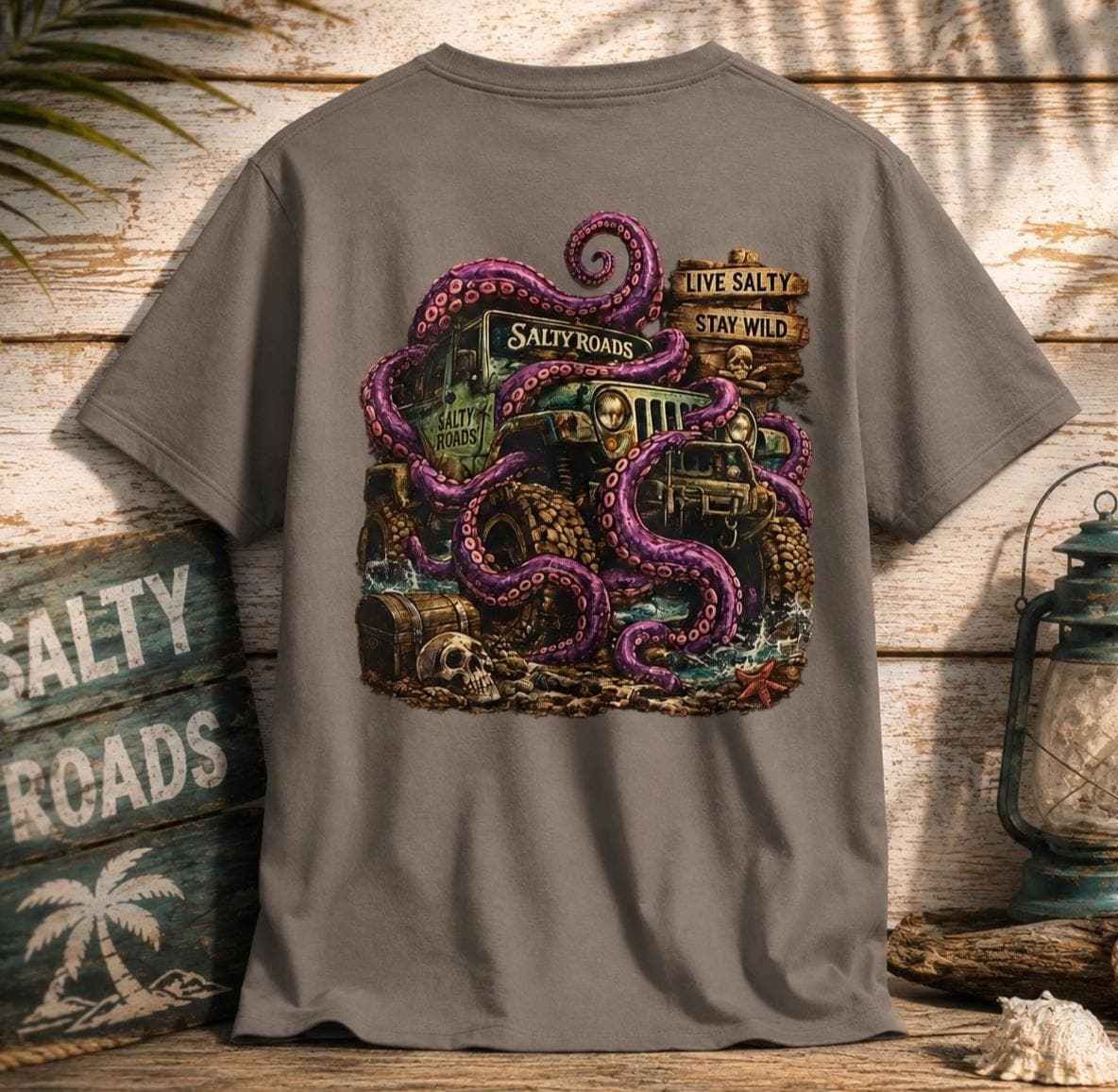
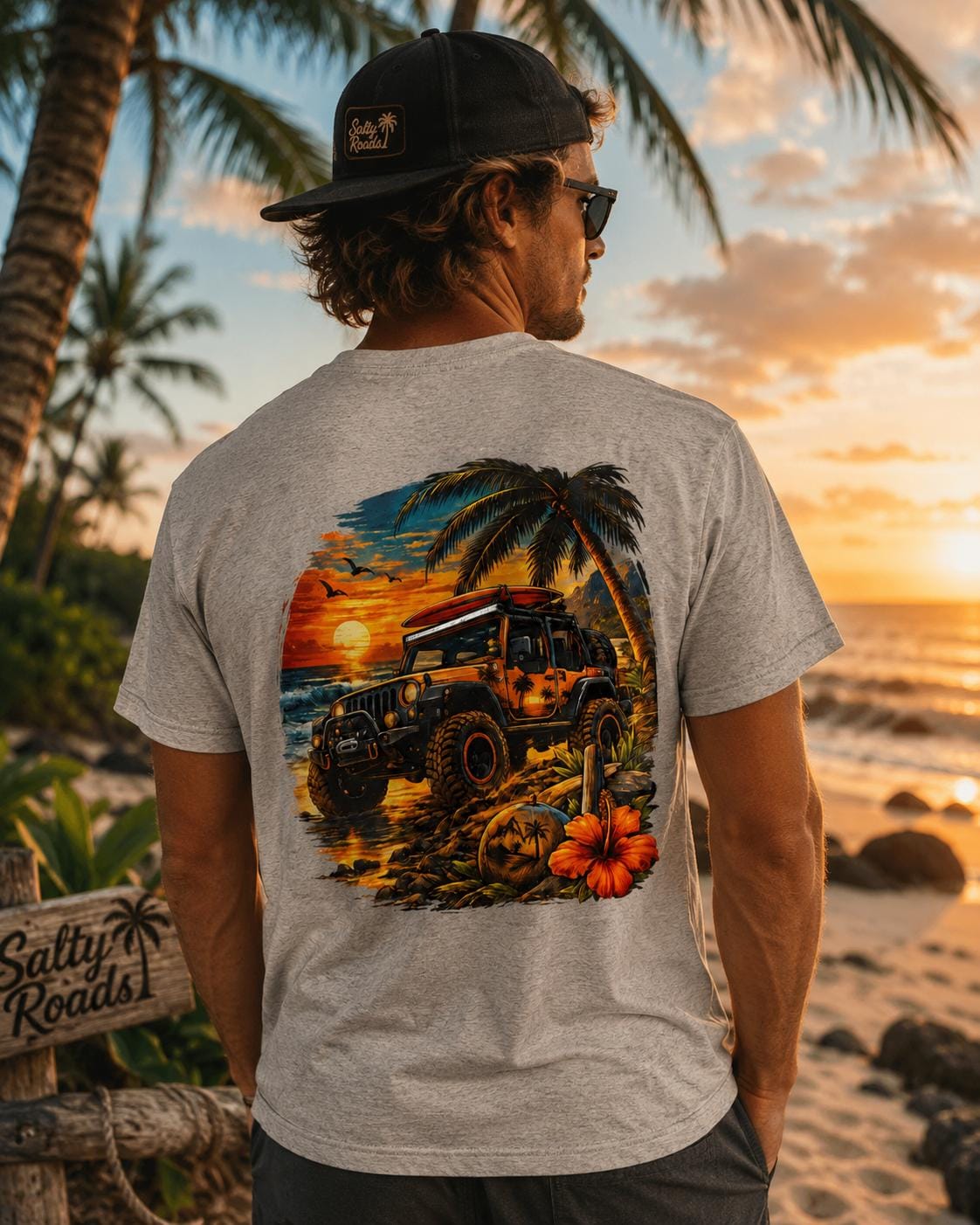
When you’re out on the sand for a late-afternoon session, this table serves as your galley. While you’re prepping, you’ll likely be wearing your Sunset Surf Run T-Shirt—the breathable fabric keeps you cool under the glare of the coastal sun, and the graphic serves as a constant reminder of why you spent four hours organizing your cargo area: so you could spend six hours just being here.
Packing Strategy: Keeping the Sand Out of Your System
The biggest mistake novices make is treating the Jeep like a dumpster. To keep your system functional, adopt the "One-In, One-Out" rule for your cargo area. Every item that touches the sand must be wiped down or stowed in a dedicated sand-proof bin before returning to the vehicle.
- The Landing Zone: Keep a small, high-quality heavy-duty mat just inside the tailgate. This is the "decontamination zone" where you drop your sandy recovery gear or footwear.
- Verticality is King: When in doubt, go up. Use ceiling-mounted storage nets for light, bulky items like light jackets, towels, or even a soft-sided cooler.
- Labeling: In a modular system, you’ll have four or five different bags and drawers. Use color-coded paracord pulls or luggage tags so that even in the pitch black of a moonless coastal night, you know exactly which drawer holds the recovery gear and which holds the Salty Roads Island Escape T-Shirt for when the temperature drops.
The Sunset Toast
Packing the Jeep is a ritual, not a chore. By 2026, the technology behind our storage solutions has finally caught up to our ambition. When the day is done, the boards are stowed, and the gear is locked away in its rightful place, you aren't just sitting in a car; you’re sitting in a mobile cabin.
Reach for that pint glass, pull your chair up to the tailgate, and look out over the tide. You’ve earned the rest. Your Jeep is organized, your gear is protected, and the road ahead is as clear as the horizon. That, my friends, is the Salty Roads way.